Buying a home is one of the biggest financial decisions you’ll ever make. While home buyers often focus on the home’s location, layout, and curb appeal, one of the most important features to evaluate is the roof. A roof protects everything beneath it, and replacing one can be a significant investment. That’s why understanding the warranty that comes with a roofing system is just as important as understanding the materials themselves.
Unfortunately, many buyers assume that all roof warranties offer the same level of protection. In reality, roofing warranties vary considerably depending on who provides them and what they actually cover. Some warranties only protect against manufacturing defects, while others include workmanship or even comprehensive system coverage.
If you’re shopping for a home or planning to replace the roof after purchasing one, understanding a Roof Warranty Comparison Wisconsin can help you make a smarter long-term investment.
Why Roof Warranties Matter for Wisconsin Home Buyers
Wisconsin weather is demanding on roofing systems. Throughout the year, roofs experience:
- Heavy snowfall
- Ice dams
- High winds
- Spring storms
- Hail
- Freeze-thaw cycles
- Summer heat
- Heavy rainfall
Even a professionally installed roof will experience years of weather-related stress. A comprehensive warranty provides peace of mind that your investment is protected if problems arise.
A proper Roof Warranty Comparison Wisconsin helps buyers understand the level of protection they are actually receiving before purchasing a home or signing a roofing contract.
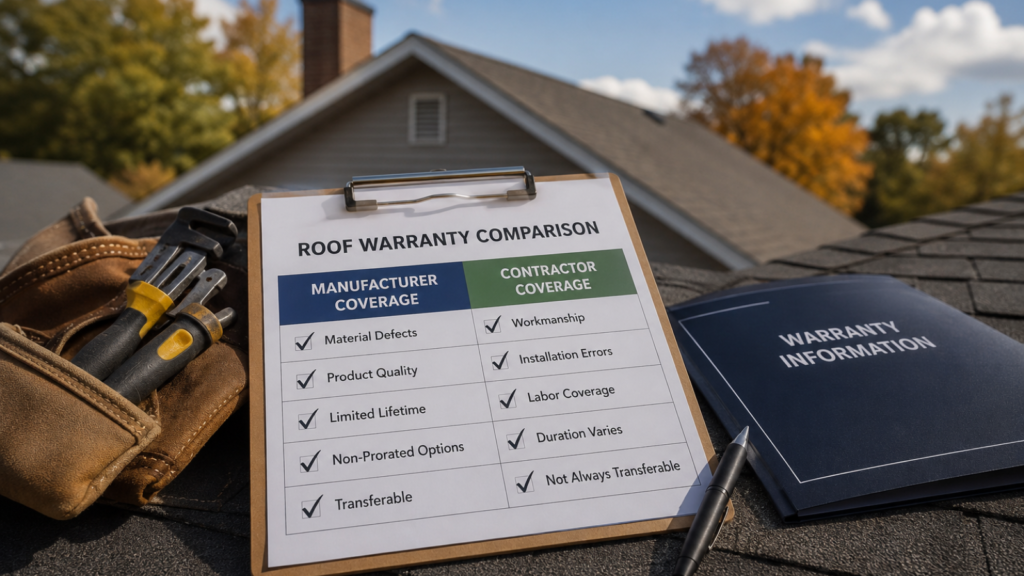
Understanding the Two Main Types of Roof Warranties
Most roofing systems include two primary forms of warranty protection.
These include:
- Manufacturer warranties
- Contractor workmanship warranties
Although both are valuable, they protect against entirely different issues.
Understanding the distinction is essential when performing a Roof Warranty Comparison Wisconsin.
What Is a Manufacturer’s Roof Warranty?
A manufacturer’s warranty covers defects in the roofing materials themselves.
If roofing shingles, underlayment, ridge caps, or other products fail because of manufacturing defects, the manufacturer may provide replacement materials or other remedies according to the warranty terms.
These warranties generally protect against problems that occur because the product was defective—not because it was installed incorrectly.
What Does a Manufacturer Warranty Usually Cover?
Coverage varies by manufacturer, but common protections include:
- Manufacturing defects
- Premature material deterioration
- Factory production flaws
- Product integrity
- Wind resistance (under certain conditions)
- Algae resistance (on qualifying products)
When evaluating a Roof Warranty Comparison Wisconsin, carefully review exactly which products are covered.
What Manufacturer Warranties Usually Do Not Cover
Many homeowners are surprised to learn what is excluded.
Typical exclusions include:
- Poor installation
- Improper ventilation
- Storm damage
- Falling trees
- Ice dam damage
- Structural movement
- Lack of maintenance
- Foot traffic damage
Understanding these limitations helps buyers avoid false assumptions about warranty protection.
What Is a Contractor Workmanship Warranty?
A contractor workmanship warranty protects against installation errors.
Even the highest-quality shingles can fail prematurely if they aren’t installed correctly.
A workmanship warranty covers problems resulting from mistakes made during installation.
This is why every Roof Warranty Comparison Wisconsin should evaluate both product protection and installation protection.
What Contractor Warranties Typically Cover
Depending on the roofing company, workmanship warranties may include:
- Installation defects
- Flashing installation
- Fastener issues
- Roof leaks caused by workmanship
- Ventilation installation
- Ridge vent installation
- Improper sealing
- Valley installation
These warranties directly reflect the contractor’s confidence in their workmanship.
Why Installation Quality Matters
Roofing systems perform as complete systems.
Even premium materials cannot compensate for poor installation.
Improper installation can cause:
- Water leaks
- Missing shingles
- Wind damage
- Ice dam issues
- Premature aging
- Moisture intrusion
- Mold growth
A complete Roof Warranty Comparison Wisconsin should always prioritize experienced installation over simply choosing the longest manufacturer warranty.
How Long Do Manufacturer Warranties Last?
Warranty lengths vary significantly.
Typical coverage periods include:
Basic Limited Warranty
20–30 years
Lifetime Limited Warranty
Often applies for as long as the original homeowner owns the property, subject to warranty terms and conditions.
Enhanced System Warranty
Some manufacturers offer upgraded warranties when an entire roofing system is installed using approved products.
Always review the warranty details carefully, as “lifetime” does not always mean unlimited coverage for every circumstance.
Contractor Warranty Lengths
Unlike manufacturer warranties, contractor workmanship warranties differ from one roofing company to another.
Common terms include:
- 1 year
- 2 years
- 5 years
- 10 years
- 15 years
- 25 years
Some contractors also offer extended workmanship guarantees backed by manufacturer certification programs.
A detailed Roof Warranty Comparison Wisconsin should examine both the length and scope of workmanship coverage.
Why Certified Contractors Can Offer Better Protection
Many roofing manufacturers certify select contractors who meet strict installation standards.
Certified contractors typically receive:
- Specialized training
- Product education
- Ongoing quality evaluations
- Access to enhanced warranties
For homeowners, this often means stronger warranty protection and greater confidence in the finished roof.
What Are Enhanced Manufacturer Warranties?
Enhanced warranties go beyond standard material coverage.
They may include:
- Extended product coverage
- Expanded labor coverage
- Workmanship coverage (when installed by certified contractors)
- System-wide protection
- Longer non-prorated periods
When conducting a Roof Warranty Comparison Wisconsin, enhanced warranties are worth considering for long-term peace of mind.
Understanding Prorated vs. Non-Prorated Coverage
This is one of the most misunderstood warranty terms.
Non-Prorated Coverage
Provides full coverage during the specified period according to the warranty terms.
Prorated Coverage
Coverage decreases as the roof ages.
For example, after many years, reimbursement may only represent a percentage of replacement costs.
Knowing the difference is essential during any Roof Warranty Comparison Wisconsin.
What Is a Roofing System Warranty?
Some manufacturers encourage homeowners to install complete roofing systems instead of individual components.
These systems may include:
- Shingles
- Underlayment
- Ice and water shield
- Starter strips
- Ridge caps
- Ventilation products
Using approved components together often qualifies homeowners for stronger warranty protection.
Why Ventilation Can Affect Warranty Coverage
Proper attic ventilation plays a major role in roof performance.
Poor ventilation can contribute to:
- Moisture buildup
- Mold growth
- Ice dams
- Shingle deterioration
- Excessive attic heat
Some warranties may be limited if improper ventilation contributes to roofing problems.
Professional contractors evaluate ventilation during installation.
Ice Dams and Wisconsin Roofing
Ice dams are common throughout Wisconsin winters.
They occur when:
- Snow melts
- Water runs toward colder roof edges
- Water refreezes
- Ice blocks drainage
- Water backs beneath shingles
Because ice dam damage often results from home conditions rather than manufacturing defects, warranty coverage varies.
A careful Roof Warranty Comparison Wisconsin should clarify how winter-related damage is addressed.
Storm Damage and Insurance
Many homeowners assume roof warranties cover storm damage.
In reality:
Storm damage is generally handled through homeowners insurance—not manufacturer warranties.
Examples include:
- Hail
- Tornadoes
- Falling trees
- Windstorms
- Lightning
Understanding this distinction prevents confusion after severe weather.
Can Roof Warranties Transfer to New Owners?
Some warranties are transferable.
However, transfer rules often require:
- Notification within a certain timeframe
- One-time transfer
- Original documentation
- Specific ownership requirements
If you’re buying a home, verify whether the existing roofing warranty can be transferred.
This is an important part of every Roof Warranty Comparison Wisconsin.
Questions Home Buyers Should Ask About Roof Warranties
Before purchasing a home, ask:
- Who installed the roof?
- What manufacturer supplied the materials?
- Is the contractor still in business?
- Is the warranty transferable?
- How much warranty remains?
- Are warranty documents available?
- Has any warranty claim been filed?
- Were repairs completed by authorized contractors?
These questions help buyers understand the roof’s remaining value.
Common Warranty Exclusions
No warranty covers everything.
Typical exclusions include:
- Neglected maintenance
- Unauthorized repairs
- Improper modifications
- Satellite installation damage
- Solar installation damage
- Animal damage
- Structural settling
- Flooding
- Earthquakes
Review exclusions before relying on warranty protection.
Why Proper Maintenance Matters
Even roofs under warranty require routine maintenance.
Recommended practices include:
- Annual inspections
- Cleaning gutters
- Removing debris
- Checking flashing
- Monitoring attic ventilation
- Prompt repairs
Ignoring maintenance may reduce warranty protection in some situations.
How Contractor Reputation Affects Warranty Value
A workmanship warranty is only valuable if the contractor stands behind it.
Before selecting a roofing company, evaluate:
- Years in business
- Customer reviews
- Local reputation
- Licensing
- Insurance
- Manufacturer certifications
- Completed projects
An established contractor often provides greater confidence than a company offering lengthy warranties without a proven track record.
Comparing Roofing Estimates Beyond Price
When reviewing proposals, don’t focus only on cost.
Compare:
- Roofing materials
- Installation methods
- Warranty length
- Warranty exclusions
- Ventilation improvements
- Flashing replacement
- Cleanup procedures
- Project timeline
A lower estimate may include significantly less warranty protection.
A complete Roof Warranty Comparison Wisconsin helps buyers compare the true long-term value of competing proposals.
Common Roof Warranty Myths
Myth 1: Lifetime Means Everything Is Covered Forever
Not necessarily.
Every warranty contains terms, conditions, and exclusions.
Always read the documentation carefully.
Myth 2: Manufacturer Warranties Cover Installation Mistakes
They generally do not.
Installation issues typically fall under contractor workmanship warranties.
Myth 3: All Contractors Offer the Same Warranty
Workmanship warranties vary widely.
Some contractors offer significantly stronger protection than others.
Myth 4: You Never Need Roof Maintenance Under Warranty
Routine maintenance remains essential.
Ignoring minor problems can allow larger issues to develop over time.
Myth 5: The Longest Warranty Is Always the Best
Length alone does not determine value.
Coverage details, exclusions, contractor reputation, and manufacturer support all play equally important roles.
A balanced Roof Warranty Comparison Wisconsin looks beyond the number of years listed on the warranty.
Red Flags to Watch for When Reviewing Roof Warranties
Home buyers should proceed carefully if they notice:
- Missing warranty paperwork
- Unclear installation records
- Unknown roofing materials
- Contractors that are no longer in business
- Verbal warranty promises without documentation
- Significant roof repairs with no receipts
Requesting documentation before closing can help prevent future disputes.
The Value of Professional Roof Inspections
Even when a roof has warranty coverage, buyers should invest in a professional inspection.
An inspection can identify:
- Current damage
- Installation quality
- Ventilation issues
- Flashing condition
- Signs of leaks
- Remaining roof life
- Maintenance concerns
A roof in good condition with transferable warranty coverage can add confidence to a home purchase.
Why Wilco Exteriors Is a Trusted Roofing Partner in Wisconsin
At Wilco Exteriors, we understand that replacing a roof is more than a construction project—it’s a long-term investment in your home. That’s why we focus on delivering exceptional workmanship, premium roofing materials, and clear communication throughout every project.
We help homeowners understand every aspect of their roofing system, including available warranty options, manufacturer coverage, and workmanship protection. Our experienced team takes the time to explain the differences so you can make informed decisions with confidence.
Whether you’re purchasing a home, replacing an aging roof, or comparing roofing estimates, we’re committed to providing quality craftsmanship backed by dependable service. Our goal is to ensure every homeowner receives lasting value, professional installation, and roofing solutions designed to perform in Wisconsin’s challenging climate.
Final Thoughts
For home buyers, a new roof is only as valuable as the protection that comes with it. While attractive shingles and modern materials are important, understanding the warranty behind the roofing system can save you thousands of dollars over the life of your home.
A thorough Roof Warranty Comparison Wisconsin allows buyers to distinguish between manufacturer protection, contractor workmanship guarantees, enhanced warranty options, and common exclusions. Instead of assuming every warranty offers the same level of security, taking the time to compare coverage helps you make smarter purchasing decisions and avoid unexpected repair expenses.
Whether you’re evaluating an existing roof during a home purchase or planning a replacement after closing, remember that quality materials, expert installation, and comprehensive warranty protection all work together to protect your investment. By choosing experienced professionals and understanding the details of your warranty, you’ll enjoy greater peace of mind through Wisconsin’s snow, storms, and changing seasons.
If you’re looking for trusted guidance on roofing systems, warranty options, or roof replacement, Wilco Exteriors is here to help. Our knowledgeable team is dedicated to providing honest recommendations, superior workmanship, and roofing solutions built to stand the test of time. With the right contractor and the right warranty, your Wisconsin home will be well protected for many years to come.